Two years ago, "AI in investor relations" mostly meant a demo and a disclaimer. In 2026 it means a set of features IR teams reach for every day. The shift happened not because the models got dramatically smarter overnight, but because the use cases got more honest: AI in IR is most valuable as a co-pilot — accelerating and standardising work — not as an autopilot making disclosure decisions on its own.
Here is where it is genuinely earning its place, and how to deploy it without creating risk.
Where AI helps IR today
Summarising announcements and results
Turning a results announcement or a dense ASX filing into a clear, plain-English summary is the highest-value, lowest-risk AI task in IR. It saves hours, and — when published as an AI summary on your investor centre — it helps retail investors grasp the key takeaways quickly. ARC lets you add these summaries to public news pages so investors get the headline without wading through the detail.
Drafting communications
First drafts of EDMs, FAQ responses, webinar invitations, and investor-update copy are now minutes of editing rather than hours of writing. The team's voice and judgement still own the final version; AI just removes the blank page.
Sentiment and signal detection
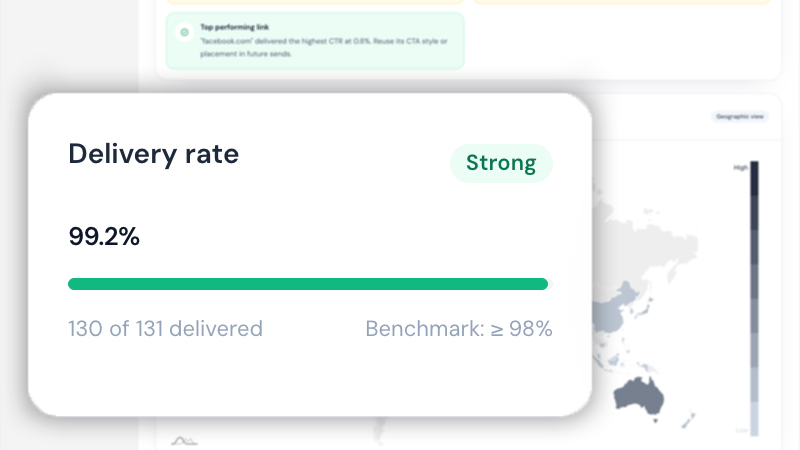
AI can scan investor questions, media coverage, and engagement patterns to flag shifts in sentiment or emerging themes before they become a surprise in the Q&A. Paired with engagement analytics, it helps IR teams see what the market is reacting to.
Answering routine investor questions
A large share of investor enquiries are variations on the same questions: dividend dates, registry details, where to find a document. An AI assistant on your investor centre, grounded in your own published content, can answer these instantly and route the genuinely novel ones to the team.
Meeting prep and next best action
Before a roadshow or a one-on-one, AI can assemble a briefing — recent engagement, prior topics of interest, outstanding questions — so IR walks in prepared. This is where AI summarisation meets the stakeholder profile.
Keeping a human in the loop
Investor relations is a regulated discipline, and that shapes how AI should be used. Three guardrails matter:
- Disclosure first. Anything market-facing must clear the same continuous-disclosure and approval process it always has. AI drafts; humans approve.
- Accuracy and grounding. AI features should be grounded in your own verified content, not the open internet, and outputs should be checked against source. A confident wrong answer is worse than no answer.
- Tone and data privacy. The model should reflect your house style, and sensitive stakeholder data should stay within your platform's security boundary.
Used this way, AI reduces manual admin without ever making an unsupervised call on what the market gets told.
A note on discoverability
There is a second-order benefit to publishing clear AI summaries and well-structured FAQs: they make your content easier for AI answer engines to find and cite. As investors increasingly ask AI assistants questions about companies, the listed entities with clean, structured, summarised content are the ones those assistants surface. Good IR content and good AI discoverability are converging.
How to get started
Begin where the risk is lowest and the time-saving is highest: summarisation and first-draft generation. Add an investor-centre assistant grounded in your own content once you are comfortable. Keep your approval workflow exactly as strict as it is today. The teams getting value from AI in IR are not the ones who handed it the keys — they are the ones who gave it the tedious 80% and kept the judgement for themselves. ARC's AI co-pilots are designed around that principle.
See ARC in action
Engagement analytics, secure data rooms, and AI co-pilots in one investor relations platform built for ASX-listed and pre-listing companies.
Book a demo